|
Pereira Cardozo (Perry)
 Bowen
Begnal
Young Bowen
Begnal
Young
Árvore Genealógica História Lembranças |
|
My Pereira Cardozo Story
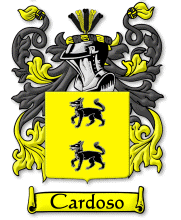
Cardozo
& Pereira Surname
|
|
Historical Documents & Family Trees
Pereira |
Cardozo |
Cardoso
Who are You
Really ? even if you have
taken a DNA Test |
Surnames -
Portuguese
Pereira -
Portuguese and Galician:
topographic name from Portuguese
pereira 'pear tree',
or a habitational
name from a place called with this word in Portugal and
Galicia (Spain).
Cardoso -
sometimes in the archaic spelling
Cardozo,
Portuguese,
Galician
&
Latin
da de
Silva - Correia
- da Rose da Rosa
|
|
|
1st
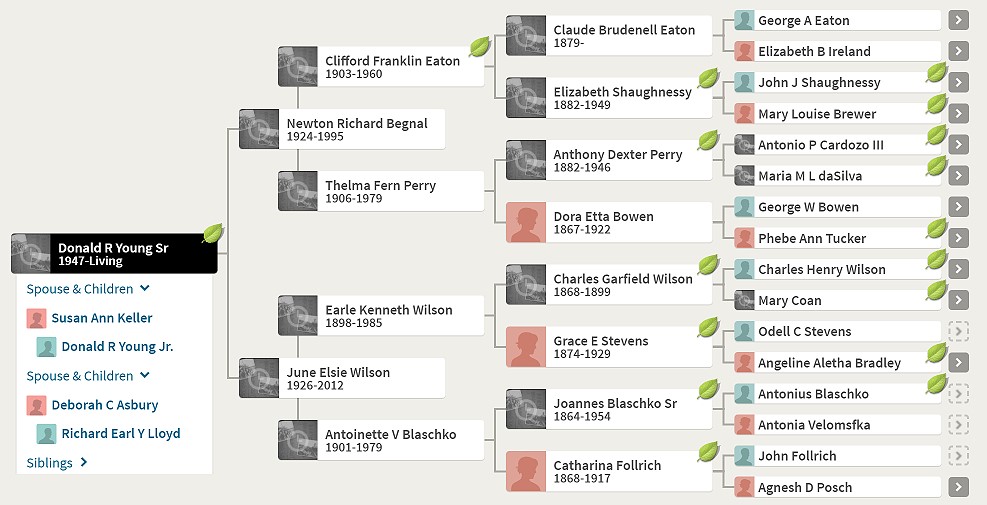
Gen: Gggg-gf:
Antonio Pereira Cardozo I, 1793, Azores, m. Mariana Francisca de Ascencao
7th Gen: D. R. "Doc" Young, CA
- Susan Ann Keller - Deborah Carol Asbury
|

Country
 Portugal Portugal
Region
 Azores Azores
Group
Central
Island
Faial
Municipality
Horta |
|
|
Junata de Freguesia de Pedro
Miguel
Board of Parish of Peter Miguel |
|
 |
 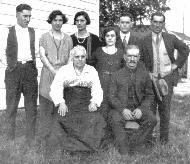 
Taken c. 1924 - Sitting Maria & Antonio Pereira Cardozo III
L - R,
Frank Perry (24),
Anna (29),
Margaret (31),
Maria (34),
Joseph (36),
Anthony (41)
|
 |
If you have Pereira Cardozo's in your
lineage or are a Pereira Cardozo, please
e-mail me
26 May 1900, Antonio Pereira Cardozo and family returned from the Azores
aboard the ship Peninsular -
Passenger List
Historical Documents & Family Trees with
Pereira
Cardoso
Cardozo
|
Gggf: Antonio Pereira Cardozo III
|
b. 31 Jan 1859, Pedro Miguel, Faial, Azores, d. 13 Mar 1947, Richmond, Contra Costa Co. CA, m. Maria Margarida
da Silva, 30 May 1881,
immigrated 24 Nov 1884. Maria & Antonio Pereira Cardozo III Children,
Anthony Dexter,
Joseph Harvey,
Maria Dorothy,
Margaret Etta, Anna Mae,
Rita,
Frank Daniel. |
|
|
. |
|
Ggf,
Anthony Dexter Perry
aka Antonio Pereira Cardozo IV
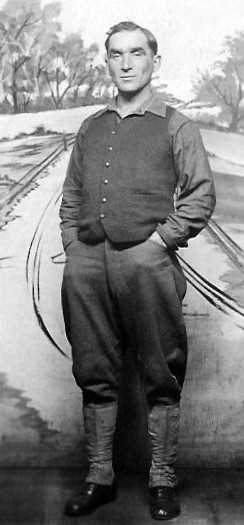 |
b. 8 Apr 1882, Faial,
Azores,
immigrated 24 Nov 1884,
d. 10 Jul 1946, Santa Cruz CA, buried
Holy Sepulchre Cemetery Hayward, CA, m. 16 Sep 1900,
Providence, RI, Dora Etta Bowen,
b. 27 Apr 1867, Foxboro,
Norfolk Co. MA, d. 17 Mar 1922, ? Unknown city, possibly San
Francisco or Hayward, CA. Still need Death Info for Dora
Etta nee Bowen Perry
Note:
30+ yrs of researching my Great
Grandfather Anthony Dexter Perry, b. 8 Apr 1882, Pedro Miguel,
Fayal Island, Azores, Portugal as Antonio Pereira Cardozo IV,
immigrated
24 Nov 1884,
Boston MA, aboard the Barque Sarah, with his mother
Maria Margarita
Children:
Thelma Ferne Perry,
b. 17 Jul 1906, Auburn, Androscoggin Co., ME,
d. 28 Mar 1979,
Los Angeles CA.
1m.
Clifford Franklin Begnal,
3 Jul 1922, Oakland, Alameda Co., CA (marriage
cert.)
2m.
Robert Joseph Benesch, 8 Feb 1930, San Francisco, San
Francisco Co., CA (marriage
cert.) found 5 Nov 2019
found 26 Sep 2009, Dora Etta Bowen parents, George W. Bowen and Phebe A. Tucker, not Gacher as per Doraetta's
birth record states.
See
1920,
1928, 1930,
1931,
1934,
1940 - Anthony D, Carrie M, Helen M, Helen Jurich |
| |
. |
|
Joseph Harvey Perry |
b. 18 Aug 1887, Taunton, MA, d. 17 May 1973, Walnut Creek, Contra Costa Co. CA. m. Emma Ruth Abrao, 28 May 1908, Richmond, Contra Costa, CA
. |
|
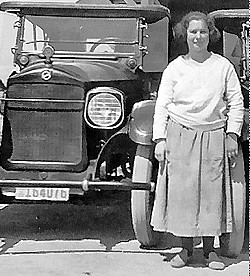
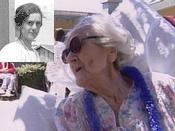
Maria Dorothy Perry
|
b. 6 Jun 1889, Taunton, Bristol Co. MA, m. Otis P. Christian,
1907 Point Richmond, Contra Costa Co. CA. Maria Dorothy Perry, who made the Guinness Book of World Record 2003, d. 20 Apr 2003 at 113, shy of 114 by two months......she was 31 when women got the right to vote, and 52 when Pearl Harbor was bombed.
|
|
Manuel Perry |
b. 1891, Taunton, Bristol Co. MA,
d. infant
. |
|

Margaret Etta Perry |
b. 15 May 1892, Berkley, MA, d. 5 Sep 1957, San Pablo, Contra Costa Co., CA. m. Edward Machado Luiz in 1909
|
| |
|
|
Anna Mae Perry |
b. 28 Aug 1894, Berkley, MA, d. 2 Nov 1942, San Pablo, Contra Costa Co., CA, m. Ira Brown
. |
|
Rita Perry |
b. 1896, Berkley, MA, m. Lucian Rose
. |
|
Frank Daniel Perry |
b. 9 May 1899 Berkley, MA, d. 9 May 1974 in San Pablo, Contra Costa Co., CA, m. Anne Ruth Celis in 1920
. |
click on image to enlarge
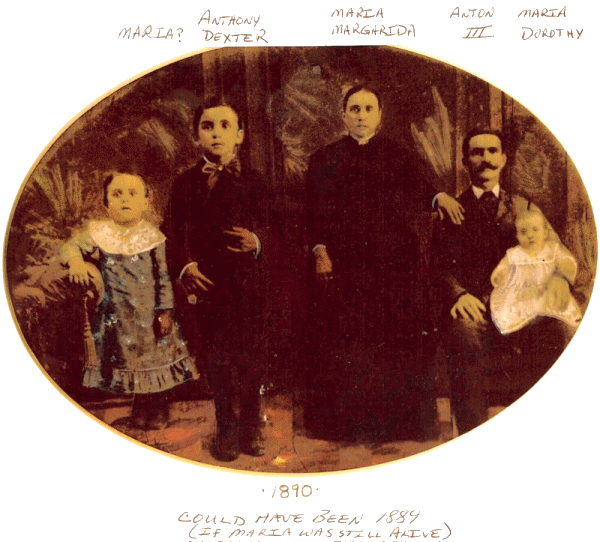
Antonio & Maria Pereira Cardozo III, had 10 children of which 4 died, a baby boy at birth in 1884, Maria 1886, Manuel 1890 as an infant and Rita in 1899, on a return trip to San Miguel, Fayal, Azores. The child on the left Maria? Could of been Maria if she lived to be 2 or 3, dying shortly after this picture.
Maria Dorothy on the right was born 6 Jun 1889, Taunton, MA. What is puzzling, why wasn't
Joseph b. 1887 pictured? Or since a family manuscript mentions baby's Maria and Manuel died as infants...the child on the left may well be Joseph in 1890, aged 2 or 3.
Anthony Dexter pictured above is my great
grandfather. I received a copy of this via e-mail from a descendant of Frank Daniel Perry.
How a man left his native country to find a better life for his wife and children, a sacrifice not some people would make today, move to another state or city for their family let alone another country……my utmost respect for my Great Great Grandfather I share this with others…….
The Worlds Special Fair 1915 - San Francisco, CA
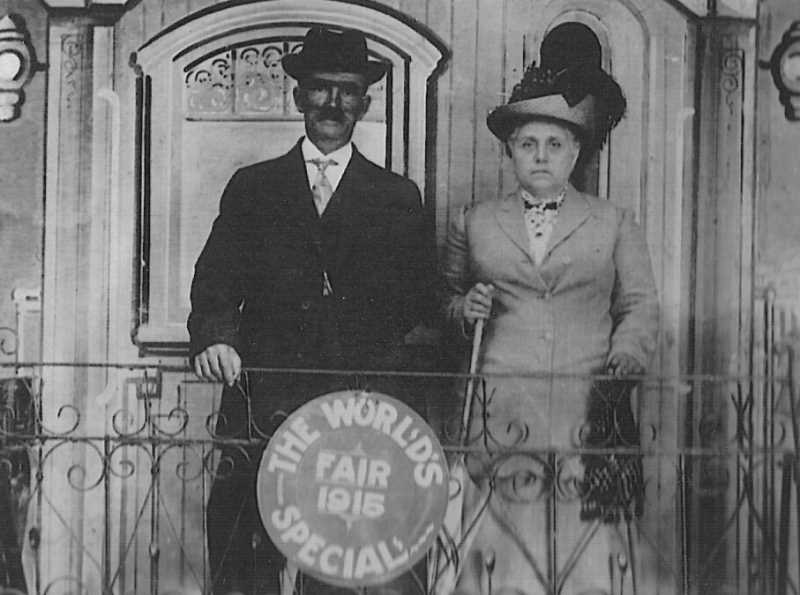
Antonio & Maria Margarida Pereria
Cardozo (Perry)
|
Town
|
Council
|
Island
|
Parish
| |
Pedro Miguel
|
Horta
|
Faial
|
Nossa Senhora da Ajuda
|
In the 1870's, direct shipping began between Boston and Horta, Faial which was an impetus for increased immigration to the United States. In 1890's, the U.S. Consul moved from Horta to Ponta Delgada which is on the most populated island in the archipelago, Sao Miguel. This brought direct shipping to Sao Miguel and further increased immigration to the United States. In 1910, the Portuguese monarchy fell, and an anticlerical government was instituted which caused conservative Catholics to leave Portuguese possessions and relocate. Many came to the Azores and to United States. More Azorean immigration came from young men fleeing mandatory military service during World War I. Jobs were available in New England because of massive industrialization. This attracted Azoreans because of their lack of employment.
The name Cardozo has been identified as a
Sephardic (Jewish) name by the Holy Office of the Catholic Church of Spain.
Spanish Jews who were forced to convert to Catholicism or face expulsion
from Spain after 1492.
www.sephardim.com Portuguese, Galician, and Spanish:
habitational name from any
of numerous places with this name, denoting a place with an abundance of
cardoons. The cardoon (Cynara cardunculus), also called the artichoke
thistle, cardone, cardoni, carduni or cardi, is a thistle-like plant which
is member of the Aster family, Asteraceae; (or archaic: Daisy family,
Compositae). It is a naturally occurring variant of the same species
as the Globe artichoke, and has many cultivated varieties. It is
native to the Mediterranean, where it was domesticated in ancient times.
Portuguese,
Galician, and Jewish (Sephardic): geographic name from Portuguese
pereira ‘pear tree’, or a habitational name from a place named with this
word in Portugal and Galicia. The surname is also common in western
India, having been taken there by Portuguese colonists.
Surnames related by marriage/descendants of Antonio Pereira Cardozo I & Mariana Francisca de Ascencao, Abrao, Barstad, Brown, Bowen, Burton, Celis, Christian, Corey, Crocker, Cyr, da Jacinthe, da Silva,Davis, de Conceicao, de Faria, Enzenauer, Felica, Galindo, Geigoldt, Jeronimo, Joaquina, Logue, Luis, Luiz, Margarida, McMullen, Mercer, Montogomery, Reynolds, Rinna, Rita, Rose, Rottiger, Parks, Pereira, Salberg, Smith, Sowers, Swensen, Turner, Wilkins.

Contact
Pereira Cardozo
Genealogy
|